California ADU rules for homeowners in 2026
What state law lets you build behind, beside or inside your house, and what a city may and may not add.
Where the law lives
California's accessory dwelling unit (ADU) law is in Chapter 13 of the Government Code, sections 66310 to 66342. SB 477 (Chapter 7, Statutes of 2024) moved the rules there from the former sections 65852.2 and 65852.22, effective March 25, 2024. Bills passed in 2025, including AB 1154, SB 543, AB 462 and AB 130, changed the law again, with most changes effective January 1, 2026. One result: the impact fee rules now sit in section 66311.5.
The state housing department (HCD) explains the law in its ADU Handbook, March 2026 edition. This guide follows the statute and that handbook. Your city's ordinance adds detail on top, within the limits set out below.
The four kinds of unit
An ADU is a home with complete independent living facilities on the same lot as a house. On a single-family lot it can take four forms.
- Detached. A new building separate from the house, including a new unit built where a detached garage stood.
- Attached. An addition joined to the house.
- Conversion. A unit built inside existing space: part of the house, an attached or detached garage, or another accessory structure. A conversion of an accessory structure may add up to 150 square feet beyond the existing walls for entry and exit, for example a stair to a second floor.
- Junior ADU (JADU). A unit of no more than 500 square feet of interior livable space, created entirely inside the walls of a single-family house, which can include an attached garage. A JADU may have its own bathroom or share one with the house. If it has no separate bathroom, it needs its own entrance and an interior door to the main living area.
Size, height and setbacks
Size. A city may set maximum sizes, but its limit must allow at least 850 square feet of interior livable space, or 1,000 square feet for a unit with more than one bedroom. Where a city has no compliant ordinance, the state limits apply: up to 1,200 square feet for a detached ADU, and up to 50 percent of the existing house for an attached ADU (Gov. Code 66314(d), as amended effective January 1, 2026). Limits on lot coverage, floor area ratio, open space and front setbacks cannot stop an ADU of at least 800 square feet with four-foot side and rear setbacks.
Height. A city may not set a height limit below these figures:
| Unit | Minimum height a city must allow |
|---|---|
| Detached ADU | 16 feet |
| Detached ADU within a half-mile walk of a major transit stop or high-quality transit corridor | 18 feet, plus 2 feet for a roof pitch that matches the house |
| Attached ADU | 25 feet, or the height limit for the house if lower |
If a two-story detached ADU fits within those heights and meets the building code, the city cannot deny it because the zone limits houses to one story. A city does not have to allow an attached ADU above two stories.
Setbacks. The side and rear setback for a new ADU can be no more than four feet. No setback applies to a unit converted from existing space, or to a new structure built in the same location and to the same dimensions as an existing one (Gov. Code 66314(d)(7)).
Parking, owner occupancy and rentals
Parking. A city may require no more than one space per ADU or per bedroom, whichever is less, and the space may be tandem on a driveway. When a garage or carport is converted or demolished for an ADU, the lost spaces need no replacement. No parking can be required for an ADU that is:
- within a half-mile walk of public transit;
- inside certain historic districts;
- part of the house or an existing accessory structure;
- on a street where on-street parking permits are required but not offered to the ADU's occupant;
- within one block of a car share vehicle.
A JADU never requires parking.
Owner occupancy. A city cannot require you to live on the property to build or rent an ADU (Gov. Code 66315). The one exception is an ADU sold separately under the narrow nonprofit rules of section 66341. For a JADU, owner occupancy applies only when the JADU shares a bathroom with the house; the owner then lives in the house or in the JADU.
Rentals. A city may require ADU rentals to be for terms longer than 30 days. A JADU cannot be a short-term rental. An ADU can be rented, but it cannot be sold separately from the house unless your city adopts a condominium ordinance under section 66342.
Impact fees and the review clock
Impact fees. Under section 66311.5, no impact fee may be charged for an ADU of 750 square feet of interior livable space or less, or for a JADU of 500 square feet or less. Above those sizes, fees are charged in proportion to the size of the house. The handbook's example: a 1,000 square foot ADU next to a 2,000 square foot house could pay 50 percent of the fee for a new house. School districts may charge their fee on ADUs larger than 500 square feet. A conversion or a JADU is not treated as a new residential use for utility connection fees, unless it is built with a new house.
The review clock. Section 66317, amended by SB 543 effective January 1, 2026, sets the timeline (Gov. Code 66317):
- The city has 15 business days to tell you in writing whether the application is complete, with a list of any missing items. If it misses that date, the application is deemed complete.
- Once the application is complete and a house exists on the lot, the city has 60 days to approve or deny it. If it does neither, the application is deemed approved.
- A denial must come with a full set of written comments and a description of how to fix the application.
- You can appeal a denial or an incomplete finding, and the city must give a final written decision within 60 business days.
If you file the ADU with a new house, the city may hold the ADU until it decides on the house. Review is ministerial: no hearing and no discretionary approval (Gov. Code 66316).
How many units a single-family lot can have
State law lists units that every city must approve under state standards alone, and a 2025 amendment made clear they can be combined. On a single-family lot, the handbook states that a city must allow at least:
- one ADU converted from existing or proposed space in the house or an accessory structure;
- one JADU inside the house;
- one new detached ADU of up to 800 square feet, with four-foot side and rear setbacks and the heights above.
A city cannot apply its own lot coverage, front setback, parking or design standards to these units. They must still meet the building code. Only one JADU is allowed per lot. If you also use SB 9, the count changes; see the SB 9 guide.
What cities may and may not require
A city may adopt an ADU ordinance with objective standards for parking, height, setbacks, landscaping, maximum unit size and historic resources (Gov. Code 66314(b)). It may also be less restrictive than state law.
A city may not:
- set a minimum lot size for ADUs;
- use subjective standards, such as "compatibility" or "high quality materials";
- send an ADU to a hearing or discretionary review;
- require owner occupancy, or record an affordability deed restriction on an ADU;
- limit the number of bedrooms;
- deny an ADU over existing nonconforming conditions that do not threaten health and safety.
A city must send its ADU ordinance to HCD within 60 days of adoption. If the ordinance does not comply with state law, it is void and the city applies the state standards. HOA rules that ban ADUs or JADUs, or restrict them unreasonably, are void under Civil Code sections 714.3 and 4751.
City of Los Angeles. Los Angeles applies its ADU Ordinance No. 186,481, effective December 19, 2019, which added section 12.22 A.33 to the Municipal Code. The City's ZA Memo 143, Revision 1, issued August 1, 2025, explains how that ordinance applies with state law as of January 1, 2025. The 2026 state changes apply on top of it. Check the zoning of your lot in ZIMAS before you start.
ADU design with TECTO Studio
TECTO Studio designs ADUs and JADUs, from the site study that shows which units fit on your lot to the issued permit, at a fixed fee agreed before the work starts. See ADU design, and the custom home cost guide for the fees around new construction in Los Angeles.
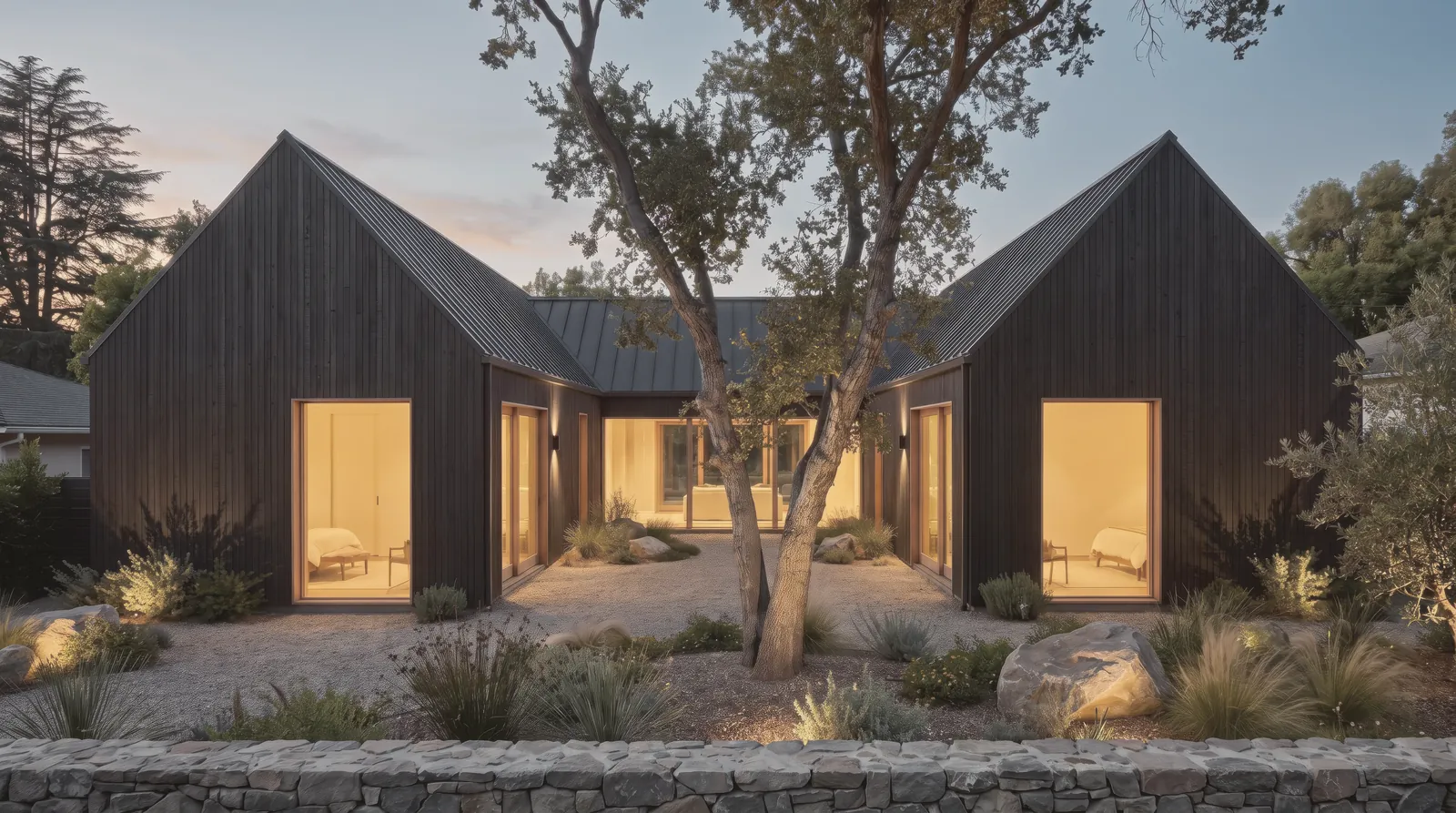
ADU design and permits in California
A second home on the lot, drawn to the rules the state sets and the city applies, from the first site plan to the permit.
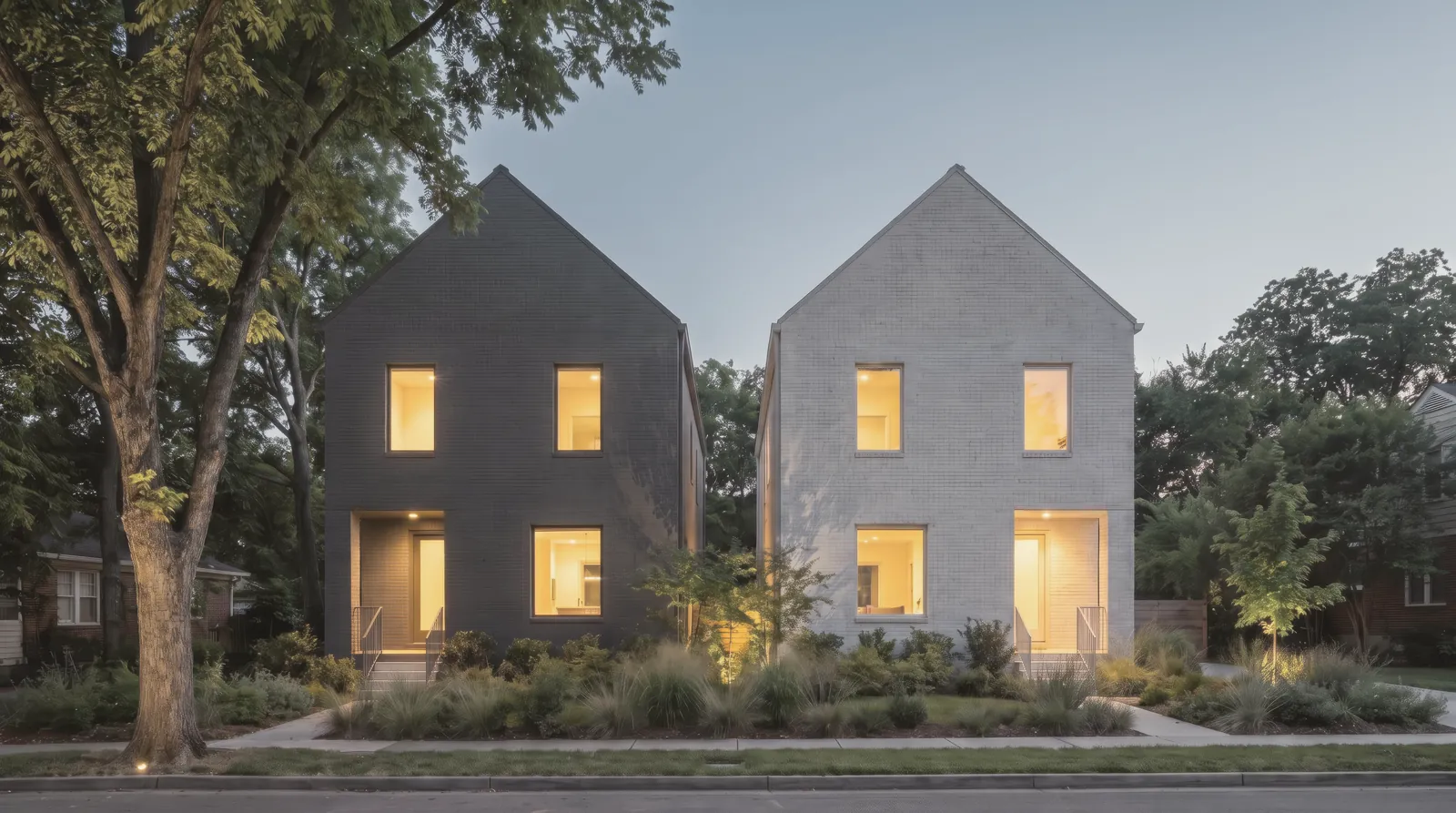
SB 9 on a single-family lot, two units and a lot split
Two homes on one lot, or one lot split into two, approved without a hearing if the lot qualifies.
What a custom home costs to design, permit and build in Los Angeles
Land, soft costs, city fees, utilities and construction, with a worked example built only from published unit figures.