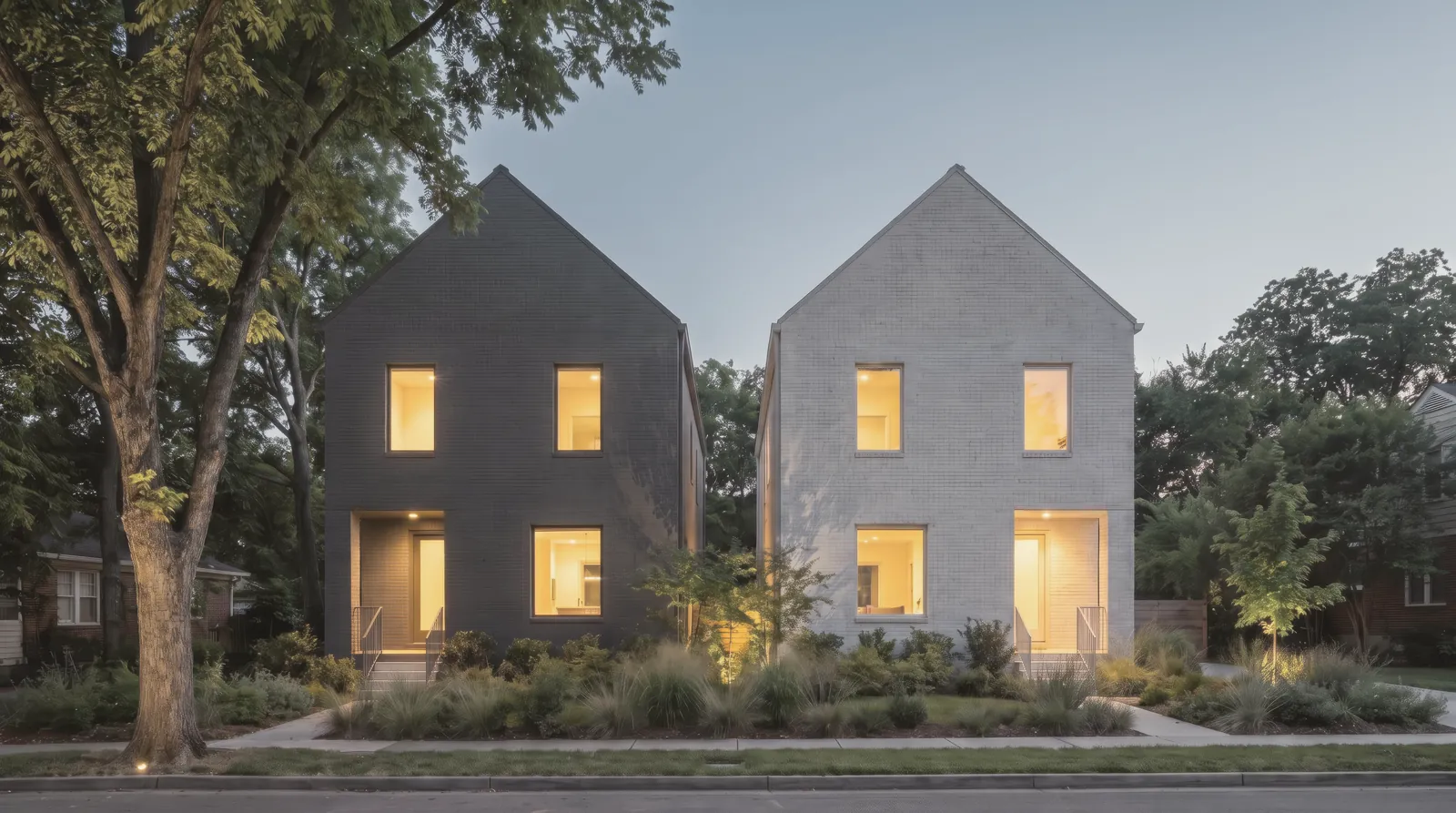
SB 9 on a single-family lot, two units and a lot split
Two homes on one lot, or one lot split into two, approved without a hearing if the lot qualifies.
What SB 9 allows
SB 9 (Chapter 162, Statutes of 2021) gives the owner of a qualifying single-family lot two routes, which can be combined:
- The two-unit development. Up to two primary homes on one lot, under Government Code section 65852.21.
- The urban lot split. One lot divided into two, under Government Code section 66411.7, with up to two homes on each new lot.
Both are approved ministerially: a staff check of the plans for objective standards only, with no hearing and no environmental review under CEQA. SB 450 (2024) and AB 1061 (2025) have since amended both sections. The state housing department (HCD) explains the current law in its SB 9 housing law fact sheet of April 2026. The City of Los Angeles explains how it applies the law in its implementation memo of August 24, 2026. This guide follows both.
Which lots qualify
The lot must be in a single-family residential zone. In Los Angeles, the memo lists the A, RA, RE, RS, R1, RU, RZ and RW1 zones, plus 1L density districts under the new Chapter 1A zoning code. A multifamily or commercial zone does not qualify, even where it allows a house.
SB 9 does not apply if the project would demolish or alter housing that:
- is under a recorded covenant or law that restricts rents to affordable levels;
- is under rent or price control (in Los Angeles, the Rent Stabilization Ordinance);
- has been occupied by a tenant in the last three years.
It also does not apply to:
- a lot where rental units were withdrawn under the Ellis Act in the last 15 years, if those units would be demolished or altered;
- a lot with certain site conditions listed in Government Code section 65913.4(a)(6)(B) to (K), as that section read on September 16, 2021, such as wetlands, hazardous waste sites, regulatory floodways, conservation areas and habitat for protected species;
- a lot individually listed as a historic resource, or a contributing structure in a historic district;
- a lot created by an earlier SB 9 lot split, or a lot next to one split by the same owner or someone working with that owner.
AB 1061 (2025) opened historic districts to SB 9 where the lot has a non-contributing structure, effective January 1, 2026, per the Los Angeles memo.
The two-unit development
A two-unit development puts up to two primary homes on the lot. A house and a new second home count as two units; an ADU or JADU does not count toward the two. The city may apply its objective zoning and design standards, with these limits from the HCD fact sheet and the Los Angeles memo:
- 800 square feet. No standard may stop either home from reaching 800 square feet. In Los Angeles, each home may be larger if it stays within the floor area the zone allows.
- Setbacks. Side and rear setbacks can be no more than four feet. No setback applies to an existing structure, or to one rebuilt in the same place to the same size. In Los Angeles, the zone's front setback still applies, and so do the side wall offset and encroachment plane rules of the Baseline Mansionization Ordinance.
- Parking. No more than one space per unit. None may be required within a half-mile walk of a high-quality transit corridor or major transit stop, or within one block of a car share vehicle. Los Angeles requires the one space to be covered where parking applies.
- Uniform standards. Since SB 450, a city cannot apply standards to SB 9 projects that it does not apply to other development in the same zone, unless they are more permissive.
- Rentals. Units must be rented for terms longer than 30 days.
In Los Angeles, the two homes may be detached, connected or attached. HCD has told cities that SB 9 does not allow an owner occupancy requirement on a two-unit development.
The urban lot split
The lot split divides one lot into no more than two lots of about equal area. Per the Los Angeles memo and the City's SB 9 page:
- neither new lot may be smaller than 40 percent of the original lot, so the split can be as uneven as 60/40;
- each new lot must be at least 1,200 square feet;
- each new lot may hold no more than two dwelling units of any kind.
The city may require easements for utilities and access to a public street. It may not require street dedications, off-site improvements, or the correction of existing nonconforming zoning conditions as a condition of the split. HCD has also advised that a city cannot charge park in-lieu (Quimby) fees as a condition of an SB 9 lot split.
Owner affidavit. You must sign an affidavit that you intend to live in one of the homes as your principal residence for at least three years. HCD's fact sheet counts the three years from approval of the lot split; the Los Angeles memo counts them from recordation of the parcel map. A community land trust or qualified nonprofit is exempt.
How SB 9 combines with ADUs
The answer depends on whether the lot is split.
| Lot | Units |
|---|---|
| No lot split | Up to two primary homes under SB 9, plus ADUs and a JADU as ADU law allows |
| After a lot split | Up to two units on each new lot, counting primary homes, ADUs and JADUs together |
On a split lot, the two units can be two homes, a home and an ADU, or a home and a JADU. HCD's April 2026 fact sheet gives an example for a lot that is not split: two SB 9 homes, an ADU and a JADU.
Los Angeles adds one rule: ADUs and JADUs are not permitted on lots that use both the lot split and the two-unit allowance, together or at different times. For the ADU side of the count, see the California ADU rules guide.
How the City of Los Angeles applies it
- Eligibility check. The City publishes an SB 9 eligibility checklist in ZIMAS, under the Planning and Zoning tab. Some areas need a biologist's statement on habitat before a project can proceed.
- Two-unit development. Most projects go straight to LADBS plan check. The City encourages projects in a specific plan or other overlay to meet City Planning staff first.
- Lot split. The parcel map is filed with City Planning on forms CP-3604 and CP-3605. LADBS can review building plans at the same time, but no building permit is issued until the final parcel map is recorded.
- Soils. A geology and soils engineering report is required in hillside, seismic and liquefaction areas when construction is proposed.
- Demolition. Demolition of an existing home triggers replacement review under the Housing Crisis Act and the City's Resident Protections Ordinance. A No Net Loss Declaration (CP-4069) may apply.
- Timeline. The City must approve or deny a complete application within 60 days, or it is deemed approved. A denial must list what to fix.
- Coastal zone. SB 9 does not override the Coastal Act, and a coastal development permit still takes a hearing.
Planning an SB 9 project with TECTO Studio
TECTO Studio checks a lot for the SB 9 rules, the zone and the ADU law, then designs the homes and takes the set through plan check to the issued permit, at a fixed fee agreed before the work starts. See single-family permits and custom home design.
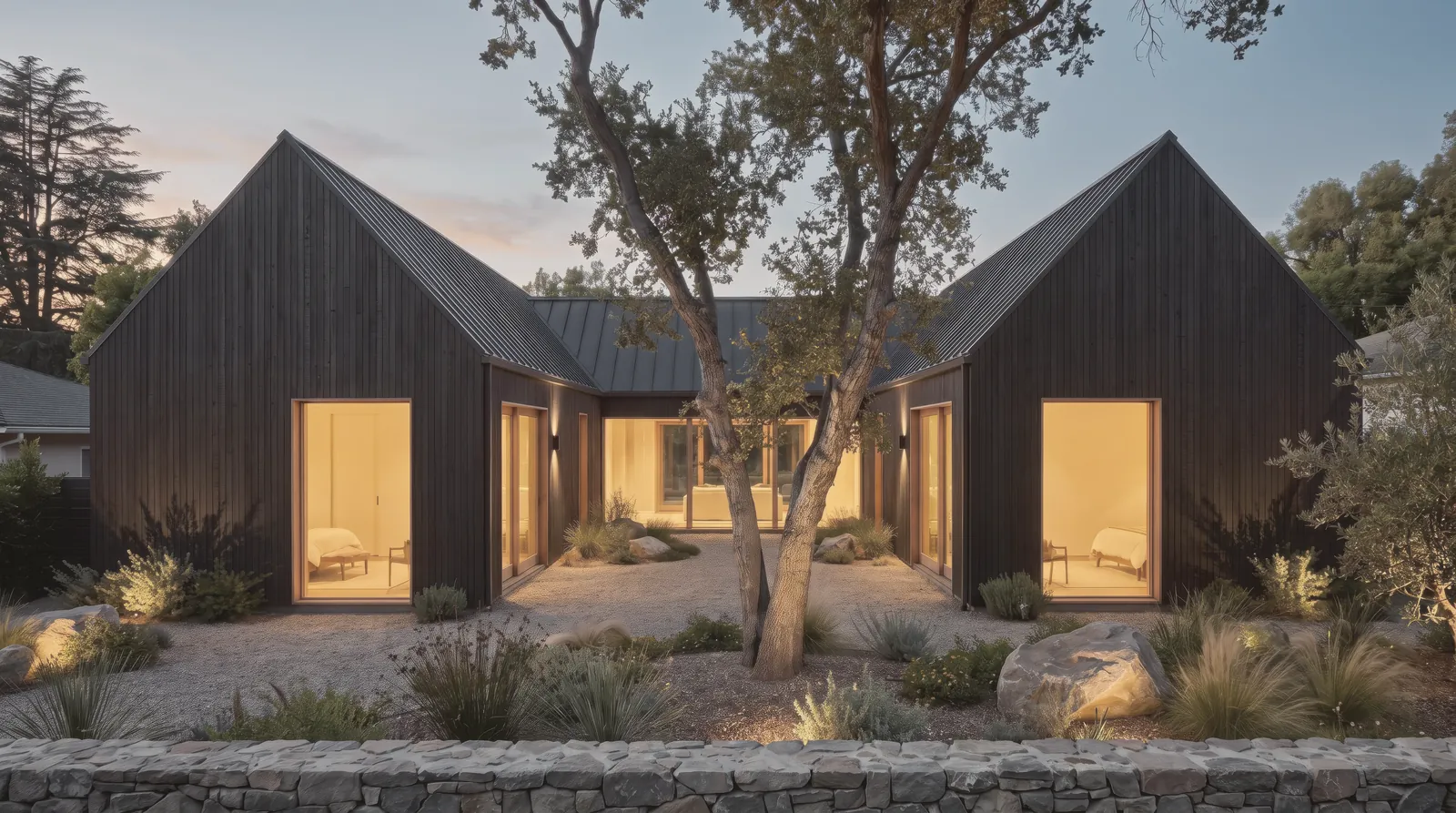
California ADU rules for homeowners in 2026
What state law lets you build behind, beside or inside your house, and what a city may and may not add.
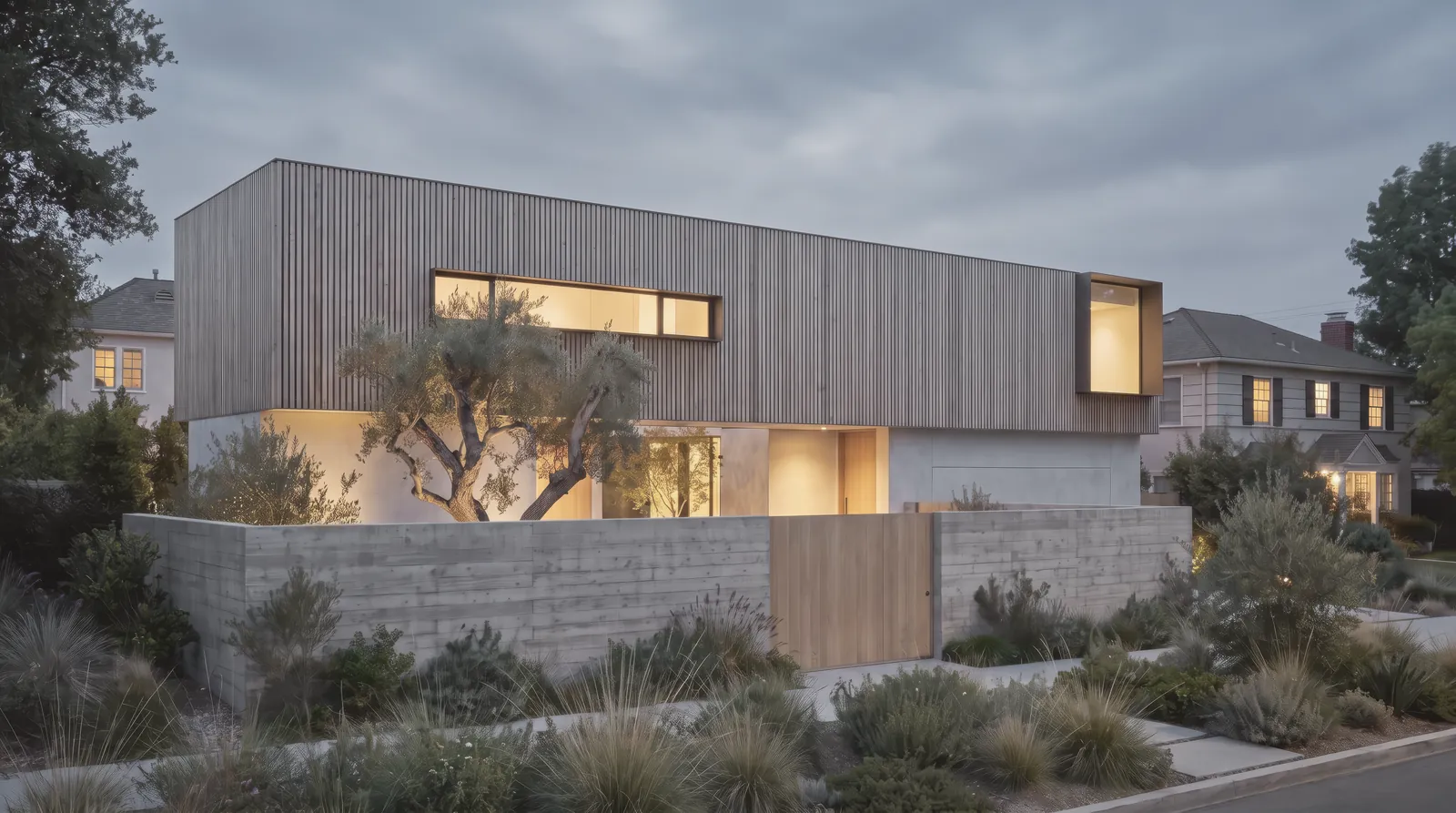
Single-family permits, from filing to the issued permit
Plan check is a conversation with the city in drawings and written responses, and it ends when the permit is issued.
Custom home design and permits in Los Angeles
A house in Los Angeles is shaped by the city that reviews it, the zone of the lot and the floor area the code allows. The studio starts there.